
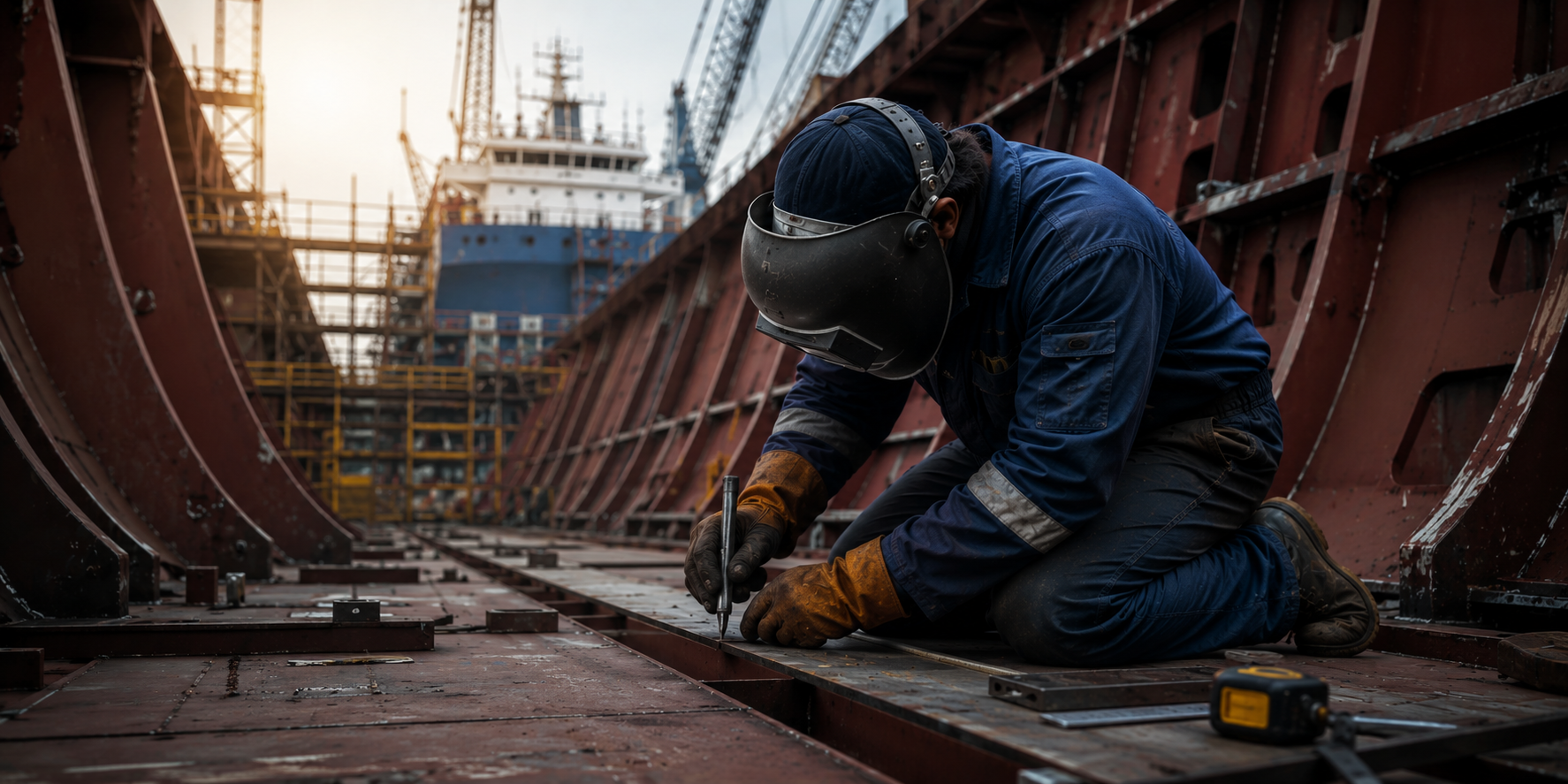


The Precision Behind the Ship Hull Fitters
Ship Hull Fitters: The Precision Behind Every Strong Vessel
A ship may be built from thousands of tonnes of steel, but its strength begins with something far more precise: how every steel section is measured, positioned, aligned and prepared for joining.
This is where the work of a skilled ship hull fitter becomes essential.
What Does a Ship Hull Fitter Do?
A ship hull fitter is responsible for assembling the structural steel components that form the body and framework of a vessel. Working from technical drawings and fabrication specifications, hull fitters prepare and position plates, profiles, stiffeners, bulkheads and structural sections before final welding.
Their work commonly includes:
- Reading and interpreting technical and structural drawings
- Measuring and marking steel components
- Cutting, grinding and preparing steel surfaces
- Fitting and aligning plates, profiles and structural sections
- Tack welding components into position
- Checking dimensions, angles and tolerances
- Preparing assembled sections for final welding
- Maintaining quality and safety standards throughout the process
Why Precision Matters in Shipbuilding
In shipbuilding, even a small alignment error can create problems later in the construction process.
Steel sections must fit within defined tolerances before welding begins. Incorrect positioning can affect structural integrity, create unnecessary rework and delay subsequent stages of production.
A professional hull fitter therefore works with a combination of technical knowledge, practical experience and precision.
The objective is not simply to make two pieces of steel fit together. The objective is to ensure that the entire structure is assembled correctly and ready for safe, high-quality welding.
Hull Fitting and Welding: Two Skills That Work Together
Hull fitting and welding are closely connected, but they are not the same job.
The hull fitter prepares, positions and aligns the structural components. The welder then creates the permanent joint according to the required welding procedure.
A high-quality weld cannot compensate for badly fitted components.
This is why successful shipbuilding depends on effective coordination between fitters, welders, supervisors, quality inspectors and engineering teams.
The Skills of a Professional Ship Hull Fitter
A skilled hull fitter requires more than physical strength. The role demands:
- Technical drawing knowledge - Understanding dimensions, symbols and assembly requirements.
- Measurement accuracy - Using measuring tools correctly to maintain required tolerances.
- Steel fabrication experience - Knowing how steel behaves during cutting, fitting and welding.
- Alignment skills - Correctly positioning large and complex structural components.
- Tool competence -Working safely with grinders, cutting equipment and fitting tools.
- Quality awareness-Recognising problems before components proceed to final welding.
- Building Stronger Ships Starts Before the Final Weld
The quality of a vessel is determined long before the final weld is inspected.
- It begins with accurate preparation.
- It continues with correct alignment.
And it depends on skilled professionals who understand that every millimetre matters.
At Latasia Infratech, we recognise the importance of technical precision across construction, engineering, welding and industrial operations. Strong projects are built through disciplined execution, experienced professionals and a commitment to quality at every stage.
Precision in fitting. Strength in welding. Reliability in every structure.